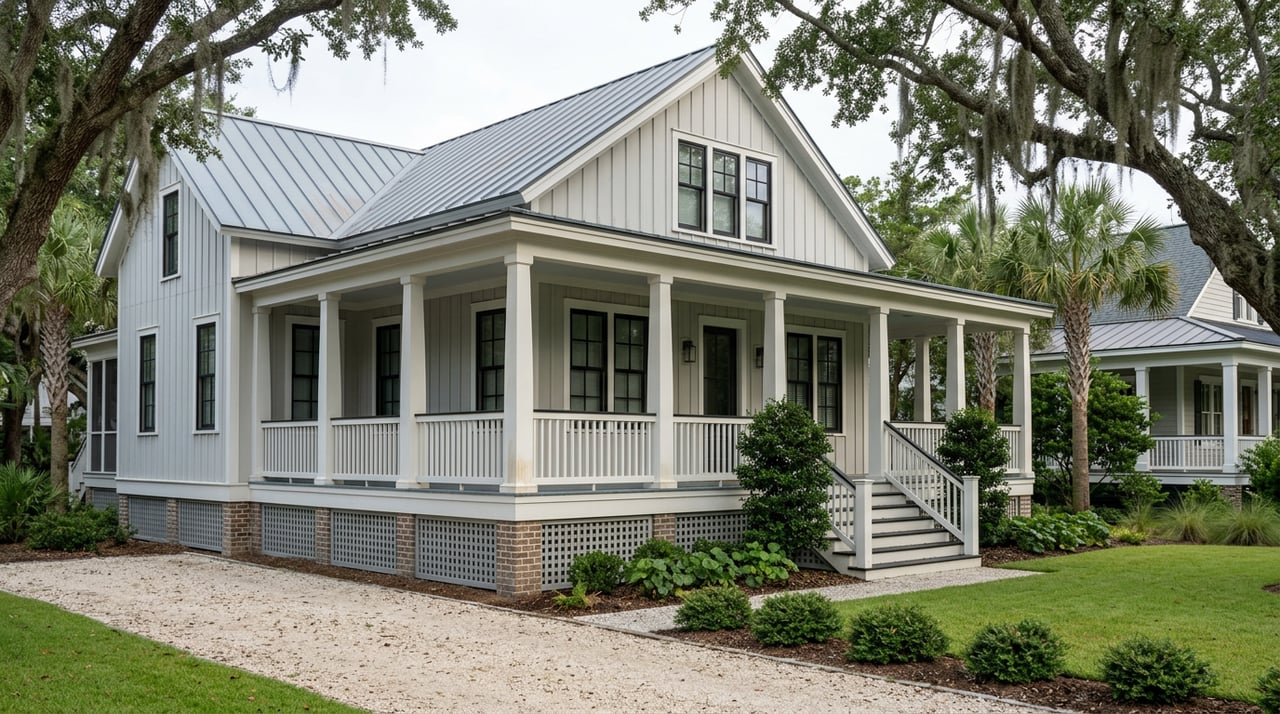
For most of a year, Sullivan's Island had over 200 yard signs reading some version of "Stop Pacaso" planted in front lawns across the island. A resident group by that name spent months pressing the town to enforce its own zoning code against a single property, a home bought by an LLC called 2 SC Lighthouse and offered in one-eighth shares through a California company called Pacaso. In February 2023, the Board of Zoning Appeals ruled against Pacaso 7 to 0. The signs stayed up.
Three years later, that vote no longer stands. On February 18, 2026, the South Carolina Court of Appeals reversed a lower court and sided with Pacaso, in a 2-1 decision that turned on a distinction most buyers researching Sullivan's Island have never had reason to think about: the difference between owning a stake in a house and renting one.
If you are comparing Sullivan's Island to Isle of Palms and you've already absorbed the standard line that one island bans rentals and the other doesn't, this is the part that line leaves out. The ban is still real. But a court just drew its edge somewhere narrower than most residents, and most buyers, assumed.
What the Ban Actually Bans
Sullivan's Island has prohibited stays under 30 days since 2001, one of the longest-standing restrictions of its kind on the South Carolina coast. A small number of properties that were operating as rentals before the ordinance took effect were grandfathered in, but that status doesn't transfer with a sale, so the pool of exceptions only shrinks over time.
That rule has shaped the island's character for two decades. It is a large part of why Sullivan's Island reads as quieter and more residential than its neighbor across Breach Inlet, and why buyers who want a full-time owner-occupied street, rather than a rotating cast of weekly renters, gravitate here specifically.
What the ordinance was never built to answer is what happens when a property isn't rented at all, in the legal sense, but is used by eight different families who each own a slice of it.
The Case That Tested the Definition
Pacaso's model works like this: a company buys a home through an LLC, then sells fractional interests, in this case one-eighth shares, to individual buyers. Each owner gets scheduled access throughout the year, up to 28 nights in blocks of one to two weeks, and pays Pacaso a $99 monthly fee for scheduling and property management. Nationally, those shares have started around $500,000 depending on the property.
When Sullivan's Island's zoning administrator got wind of the arrangement, the town's read was straightforward: eight unrelated households cycling through a single home on a schedule looks and functions like a vacation rental, whatever the paperwork calls it. The Board of Zoning Appeals agreed unanimously in 2023. So did the Charleston County Circuit Court on the first appeal.
The Court of Appeals disagreed. Writing for the majority, the court found that because Pacaso's owners hold an actual ownership interest and pay nothing for the nights they occupy, the arrangement simply "does not constitute commercial use of the property." There's no landlord, no tenant, and no payment exchanged for lodging, which is the exact transaction the town's ordinance was written to prohibit. Without that transaction, the court reasoned, the ordinance doesn't reach this structure at all.
It's a narrow ruling. It does not legalize Airbnb-style rentals, and it does not touch the 2001 ban on paid nightly stays. What it does is confirm that a specific ownership model, one built around shares rather than rentals, sits outside a rule that residents believed covered exactly this kind of situation.
Two Islands, Two Rental Philosophies
The contrast with Isle of Palms is worth sitting with, because it shows two different answers to the same underlying question: how much shared or rotating use of a home should a residential island tolerate.
| Sullivan's Island | Isle of Palms | |
|---|---|---|
| Short-term rental status | Banned since 2001; a shrinking number of non-transferable grandfathered exceptions | Fully licensed and normalized; any rental under 30 days requires a city business license |
| The rule's most recent test | Feb. 2026 Court of Appeals ruling allowed a fractional-ownership structure to stand despite the ban | Nov. 2023 referendum: voters rejected a proposed 1,600-unit rental license cap by 54% |
| What it signals | The nightly-rental ban holds, but ownership structures now have a narrow legal opening | Given the chance to restrict rentals further, residents chose not to |
Isle of Palms residents had their own moment of reckoning on this question in November 2023, when a ballot measure asked voters whether to cap short-term rental licenses at 1,600, a limit that would have applied only to non-owner-occupied properties. It failed, with 54 percent voting against it. According to figures the resident group Preserve IOP Now has cited from the city's own planning department, roughly 22 percent of housing units on the island currently hold an active short-term rental license. Whatever tension exists there over rental density, it hasn't translated into appetite for a cap.
Put the two islands side by side and the difference isn't really about tolerance for visitors. It's about what kind of shared use each community has decided to permit, and how each is currently being tested: Isle of Palms by ballot, Sullivan's Island by courtroom.
Not as Novel as It Sounds
The instinct is to treat fractional ownership as an outside disruption, a Silicon Valley product parachuted into a barrier island that wasn't built for it. The regional sales data doesn't quite support that framing.
According to the Charleston Trident Association of Realtors, more than 900 fractional ownership interests have sold through the greater Charleston-area MLS since 2000, and as of early March 2026 there were 29 such listings actively for sale, only a handful of them tied to Pacaso specifically. Shared ownership among families and friends who split the cost of a coastal house has a long history in this market. What changed with Pacaso wasn't the concept. It was the packaging: a company managing the shares, setting the schedule, and marketing the arrangement to strangers rather than relatives.
That distinction is likely why the case drew so much resistance in the first place. The zoning fight was never really about whether co-ownership belongs on Sullivan's Island. It was about whether a company can commercialize that tradition at scale without tripping the same wire that catches a traditional nightly rental.
What Happens Next Isn't Settled
Two details are worth holding onto if you're weighing a purchase on the island right now. First, the ruling is unpublished, which under South Carolina court rules means it doesn't carry binding precedent the way a published opinion would. Second, it was decided 2-1, not unanimously.
Legal analysts covering the case have pointed out that the court's reasoning leaves the town a clear path forward: if Sullivan's Island wants to regulate fractional ownership the way it regulates rentals, it needs to write that into the ordinance explicitly, rather than relying on the town's interpretation of a rule that was written before this ownership model existed. As of this spring, trade press covering Pacaso's broader legal fights described its litigation with the town as still active, which suggests the question was not fully closed even after the appellate win.
That means a buyer evaluating a fractional-ownership opportunity, or a neighboring property, is looking at a rule that could still look different by the time they'd sell.
What This Means If You're Comparing the Two Islands
The headline fact, that Sullivan's Island bans short-term rentals and Isle of Palms doesn't, is still true and still a meaningful difference between the two markets. What this case adds is the reminder that a rule like that isn't a fixed wall. It's a boundary that gets tested, occasionally in ways that redraw it slightly, and the direction of that redrawing matters depending on what you're trying to buy.
If what you want is a full-time residential street with as little rotating occupancy as legally possible, the core protection you're relying on, the ban on paid nightly stays, is intact and was not touched by this ruling. If you're specifically interested in shared or fractional ownership as a way into the island, this case is the clearest signal yet that a properly structured version of that arrangement has a real legal footing here, at least for now.
Either way, the practical step is the same: know a specific property's history, its zoning designation, and whether any fractional or co-ownership structure is already attached to it before you write an offer. On an island where transactions are relationship-driven and inventory is thin, that kind of detail rarely shows up in a listing description.
If you're sorting through what a property on Sullivan's Island, or across the water on Isle of Palms, actually allows before you commit to either, Crown Coast can walk through the specifics with you, house by house. Work With Us.
A Few Questions Worth Asking Directly
Does this ruling mean short-term rentals are now allowed on Sullivan's Island? No. The case addressed a specific fractional-ownership structure, not nightly rentals. A traditional short-term rental still involves a landlord-tenant relationship and payment for lodging, the exact transaction the court said this arrangement did not involve.
Can any buyer set up a similar arrangement now? The mechanics matter more than the label. The court's reasoning depended on there being no rental payment and no tenant relationship. A structure that functions like a nightly rental in practice, regardless of what the paperwork calls it, would likely face the same zoning scrutiny that started this case.
Is this settled law going forward? Not entirely. The opinion is unpublished, which limits its use as binding precedent, and the panel split 2-1. The town retains the option to revise its ordinance to address fractional ownership specifically, which could change the rule for the next buyer even though it didn't change the outcome for this one.